
The keyword “fuck trump” has become one of the most searched political phrases on the internet over the past decade. While controversial and emotionally charged, it reflects broader conversations about political expression, digital activism, freedom of speech, and online culture surrounding Donald Trump, the 45th President of the United States.
For website owners and content creators, understanding the meaning and context behind this keyword is essential. Searches for this phrase are rarely just about profanity — they represent political sentiment, protest culture, media debates, and online discourse trends.
This article provides a balanced, informational overview designed to help readers understand why the phrase trends online and why it attracts significant SEO traffic.
What Does “Fuck Trump” Mean?
At its core, the phrase is a political slogan used by critics of Donald Trump to express strong opposition to his policies, leadership style, or political ideology. It emerged prominently during the 2016 U.S. presidential election and continued throughout his presidency and afterward.
The phrase appears in multiple contexts:
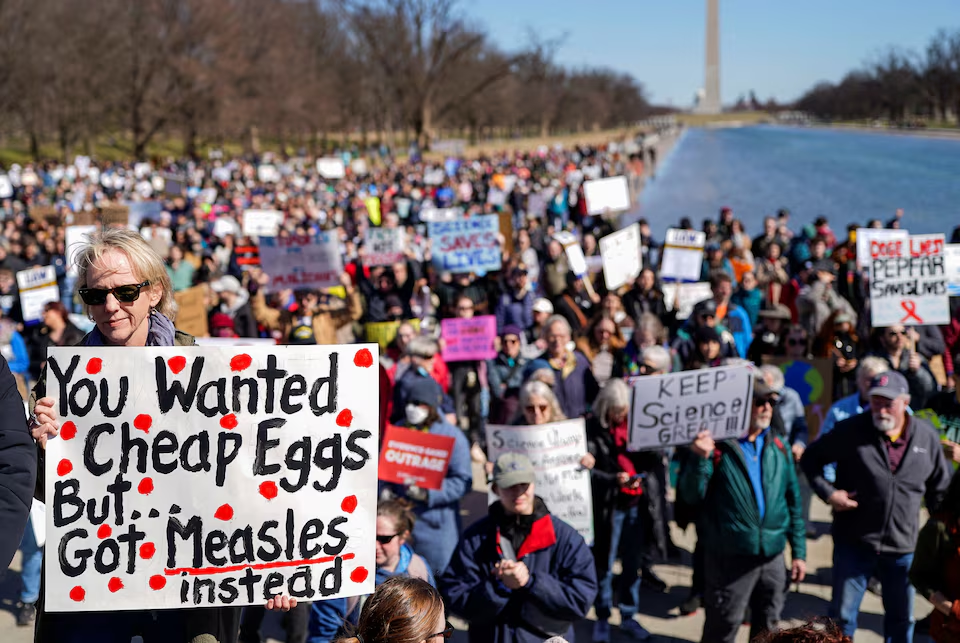
Protest signs and demonstrations
Social media hashtags
Political merchandise
Music and pop culture references
Online discussions and memes
Rather than functioning as a literal statement, it operates as a form of political expression — similar to protest slogans used throughout modern history.
Origins of the Phrase
The phrase gained widespread visibility during the 2016 election cycle when political polarization in the United States reached unusually high levels.
Several factors contributed to its rise:
1. Highly Polarized Politics
Trump’s unconventional political style created strong reactions from both supporters and critics. Opponents often used blunt or provocative language to express dissent.
2. Social Media Amplification
Platforms like Twitter, Reddit, and Instagram allowed slogans to spread rapidly through hashtags and viral posts.
3. Protest Movements
Large demonstrations across U.S. cities featured slogans criticizing government policies, immigration decisions, and social issues tied to Trump’s administration.
The Role of Internet Culture
Online culture transformed the phrase into a viral keyword.
Memes and Digital Expression
Internet users frequently turned political frustrations into memes, satire, and parody content. Short, emotionally direct phrases often perform better online because they are easy to share.
Search Engine Trends
People search the phrase for different reasons:
Understanding political debates
Looking for protest imagery or news coverage
Researching public opinion trends
Exploring political commentary
Because of this mixed intent, the keyword generates consistent traffic across news, opinion, and informational websites.
Freedom of Speech and Political Expression
One major reason the phrase attracts discussion is its connection to free speech debates.
In democratic societies, political slogans — even offensive or harsh ones — are often protected as expressions of opinion. Legal scholars and commentators frequently discuss how political speech historically includes strong criticism of leaders.
Examples throughout history show that political protest language tends to become more intense during periods of social division or political change.
Media Coverage and Public Debate
News outlets and commentators have analyzed the phrase as part of a larger cultural phenomenon rather than just a slogan.
Key discussion points include:
The growing role of emotional language in politics
The influence of social media on political discourse
The normalization of blunt political messaging
The impact of viral slogans on public opinion
Supporters of Trump often argue such language reflects declining civility, while critics view it as a legitimate form of protest.
Why the Keyword Gets Massive SEO Traffic
From an SEO perspective, “fuck trump” is considered a high-intent trending keyword because it combines several traffic drivers:
1. Emotional Search Behavior
People often search emotionally charged phrases during political events, elections, or news cycles.
2. Curiosity Searches
Users frequently want context:
Why is this phrase popular?
Where did it originate?
What does it represent politically?
3. Cultural Research
Students, journalists, and researchers analyze political slogans as cultural artifacts.
4. Viral Moments
Whenever Donald Trump appears in major news headlines, related keywords spike again in search volume.
Political Polarization and Online Language
The popularity of the phrase also highlights a broader trend: modern political communication is increasingly shaped by internet language.
Characteristics include:
Short slogans replacing long arguments
Meme-driven political messaging
Emotional engagement over formal debate
Rapid spread through algorithms
This shift affects how political ideas are shared and understood globally.
Criticism and Controversy
The phrase remains controversial for several reasons:
Civility Concerns
Some critics argue aggressive slogans contribute to political division and reduce constructive dialogue.
Normalization of Profanity
Others worry that widespread use of profanity in politics lowers public discourse standards.
Political Identity
For many people, reactions to the phrase reflect deeper political identity and group affiliation.
Understanding these perspectives helps explain why the keyword generates ongoing debate.
Impact on Pop Culture
Beyond politics, the phrase has entered popular culture through:
Music lyrics
Comedy routines
Street art
Protest fashion
Online satire
This crossover into entertainment further increases search interest and online visibility.
SEO Strategy: How to Rank for This Keyword
If your goal is traffic growth, focus on informational and analytical content rather than opinion-heavy writing.
Best Practices
Provide historical context
Explain cultural meaning
Maintain neutral tone
Include FAQs
Update content during election cycles
Google tends to rank pages that explain controversial topics rather than promote extreme viewpoints.
FAQ Section (SEO Boost)
Why do people search “fuck trump”?
Most searches are informational — users want context about protests, political culture, or media discussions.
Is it a political slogan?
Yes, it functions primarily as a protest slogan expressing opposition to Donald Trump.
When did it become popular?
It rose sharply during the 2016 U.S. presidential election and remained visible throughout Trump’s presidency.
Why is it still trending?
Political relevance, media coverage, and internet culture keep the keyword active in search trends.
Conclusion
The phrase “fuck trump” is more than a controversial keyword — it represents a moment in modern political communication shaped by social media, protest culture, and intense political polarization. Its popularity demonstrates how digital platforms transform political emotions into searchable internet language.
For website owners aiming to gain traffic, the key is approaching the topic with clarity, neutrality, and cultural analysis. By explaining context rather than amplifying division, content can attract readers seeking understanding while maintaining long-term SEO performance.




Leave a Reply